
How to Prevent Cold Spots in Corners?
Quick Summary
Cold spots in corners form mainly from thermal bridging at wall junctions and gaps in insulation, so the fix depends on the cause. Start by checking for draughts and moisture, then keep heating steady and ventilate. Lasting prevention usually means insulating the corner junction continuously with the wall.
Corners often have less insulation and more solid masonry, so heat escapes faster there.
Feel and compare the corner with the middle of the same wall on a cold morning.
Keep indoor relative humidity below about 60% where possible to limit condensation risk.
Move furniture a few centimetres away from external corners so air can circulate.
Insulation must run continuously around the corner, since a gap leaves a cold strip.
Table of Contents
Why Cold Spots Form in Room Corners
Last Updated: November 7, 2026
A cold spot is a patch of wall, ceiling or floor that stays noticeably colder than the rest of the room. Corners are the usual culprit.
The corner has less insulation, more exposed surface area and fewer routes for heat to reach it. Warm air rises and circulates through the room, but it rarely reaches the coldest point in a corner. Energy Saving Trust guidance on heat loss in homes
Understanding the cause matters because each cause has a different fix. If you want a professional to confirm the source, you can book a FREE damp and mould survey instead of diagnosing it alone. Two common causes are below.
Thermal bridging at wall junctions
A thermal bridge is a route where heat escapes through a material that conducts it more easily than the surrounding wall. Where two external walls meet, the structure often has less insulation and more solid masonry, so heat flows out faster.
Concrete lintels and steel beams conduct heat well
Corners have fewer insulated layers than flat wall areas
Window reveals and wall junctions create extra cold surface area
Watch out: Cold corners often look like damp when they are really thermal bridges. Check for a cold surface before assuming a leak.
Insufficient or uneven insulation
Many older UK properties were built before modern insulation standards (English Housing Survey 2024 to 2025: home insulation - fact sheet). The external walls may have no cavity insulation at all, or the insulation may have settled, shifted or been fitted unevenly. Gaps near the corner are common, and a small gap can create a large cold patch.
Diagnosing a Cold Spot: A Step-by-Step Flow
Before spending money on any fix, work through a sequence that rules causes in or out. The order matters: cheap checks come first, and each test should narrow the possibilities rather than confirm a hunch.
Map the pattern. Note every cold corner in the room and whether the cold patch runs along a wall junction, up to the ceiling, or down to the floor. A single corner points to a local defect; several corners on external walls point to insulation or bridging.
Feel and compare surfaces. On a cold morning, compare the corner with the middle of the same wall. A sharp temperature difference over a short distance suggests a thermal bridge; a broad, gradual difference suggests missing or thin insulation.
Check for air movement. Hold a thin tissue or the back of your hand near skirting boards, window reveals and ceiling junctions. A steady flutter indicates air leakage rather than conduction.
Look for moisture evidence. Staining, peeling paint, black spotting or a musty smell changes the diagnosis towards condensation or a water defect.
Measure temperature and humidity (see below) to put numbers on what you have observed.
Decide which category fits: thermal bridging, insulation gap, air leakage, condensation, or a leak or structural defect. Only then choose a fix.
Measuring surface temperature and humidity safely
A basic digital hygrometer and an infrared thermometer are enough for a first check. A thermal camera is useful but not essential, and its images need interpreting with care.
Measure air temperature in the middle of the room and again close to the corner, at the same height.
Use the infrared thermometer on the wall surface, holding it the distance the manufacturer specifies and avoiding shiny or reflective finishes, which give false readings.
Take readings on a cold morning with the heating off for an hour, so the building's own performance shows through.
Record relative humidity in the corner and in the room centre. Keep indoor relative humidity below about 60% where possible to limit condensation risk.
Repeat readings on a warmer day to separate seasonal condensation from a persistent defect.
A corner surface several degrees colder than the room air, with no draught and no moisture, points towards thermal bridging or missing insulation. Once the cause of the cold corner is clear, compare it with temperature differences elsewhere in the home to see whether broader heating or insulation issues need attention to fix uneven room temperatures.
Watch out: Infrared thermometers and thermal cameras measure surface temperature, not air temperature, and they cannot prove why a surface is cold. Use them to locate the problem, not to diagnose the cause on their own.
Telling condensation apart from a leak
Condensation forms when warm, moist air meets a cold surface. It usually appears on the coldest areas, such as corners and behind furniture, and it often wipes away.
Watch out: Do not paint over a damp or leaking corner. The problem will return and the stain will show through.
The article sets out a sequence of checks to work through before spending money on a fix.
Step | What to do | Note |
Map the pattern | Note every cold corner and where the patch runs | Single corner suggests a local defect |
Feel and compare surfaces | Compare corner with the middle of the same wall | Sharp difference suggests a thermal bridge |
Check for air movement | Hold a thin tissue or hand near junctions | Steady flutter indicates air leakage |
Look for moisture evidence | Check for staining, peeling paint or black spotting | Changes diagnosis towards condensation or a defect |
Measure temperature and humidity | Take readings on a cold morning with heating off | Puts numbers on what was observed |
Decide the category | Match findings to bridging, gap, leakage or damp | Only then choose a fix |
How to Stop Condensation in Room Corners
Condensation is the most common reason corners grow mould. The fix is to keep the surface warmer, lower the moisture in the air, or both.
Start with the cheap, quick steps:
Keep heating on at a low, steady level rather than switching it on and off, and read our step-by-step guide to stopping condensation on walls for the full set of fixes.
Move furniture a few centimetres away from external corners so air can circulate
Open trickle vents or use extractor fans when cooking and showering
Wipe down cold surfaces each morning during colder spells, or explore our condensation prevention service if the problem keeps returning.

Where condensation keeps coming back, the next step is to raise the wall temperature or reduce moisture at source.
Insulating Cold External Walls and Corner Junctions
Insulation is the most effective long-term fix for cold corners, but the right approach depends on wall construction, budget and how much disruption you can accept. The three main routes suit different buildings.
Cavity wall insulation fills the gap between two leaves of brick or block. It suits homes with an unfilled cavity of suitable width and in good condition, and is usually the least disruptive option where it applies.
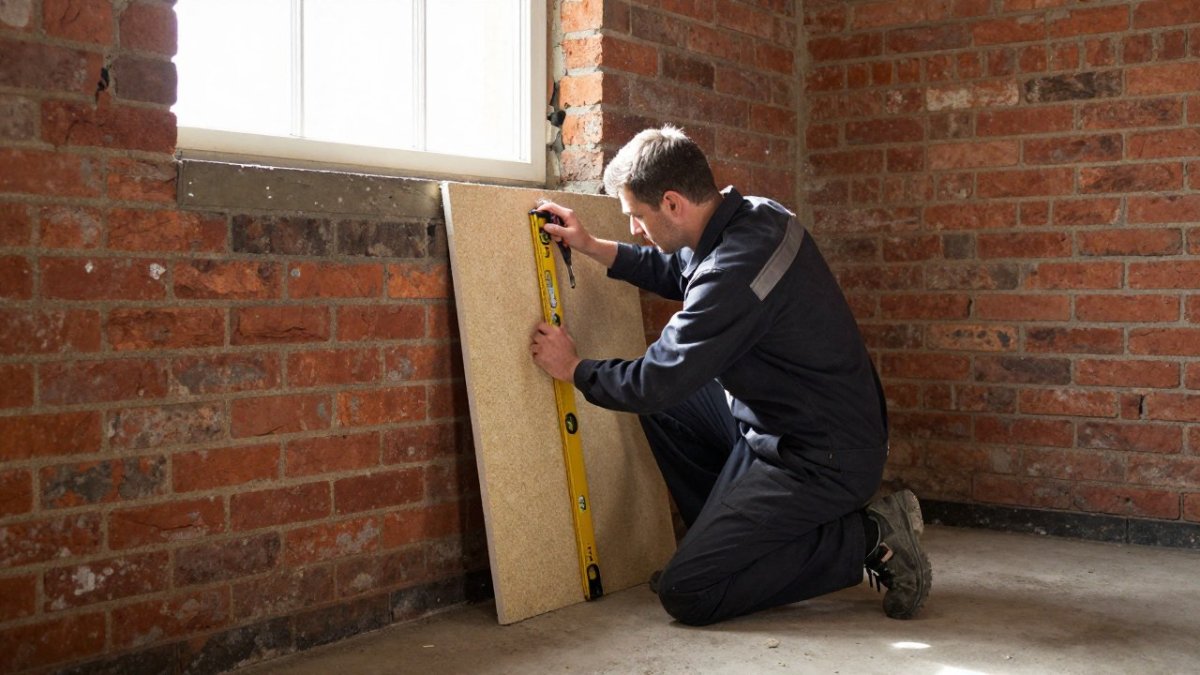
Internal wall insulation adds an insulated lining to the inside face. It suits solid-wall properties and flats where external work is not possible, but it reduces room size slightly and requires care at junctions to avoid new cold bridges.
External wall insulation wraps the outside of the building. It suits solid walls and can improve weatherproofing, but it changes the appearance, needs planning consideration in some cases, and is the most disruptive and costly route.
Corner junctions need particular care because they concentrate heat loss. Insulation should run continuously around the corner so that no cold line is left at the join. Where two external walls meet, the structure often has more solid masonry and fewer insulated layers, so the junction needs the same insulation thickness and continuity as the flat wall.
Choosing between the options
Use cost, disruption and likely effectiveness to decide the order of work rather than attempting everything at once.
Lowest cost, least disruption: seal draughts, improve airflow, adjust heating and move furniture. These address symptoms and air leakage but will not fix a thermal bridge.
Medium cost, some disruption: targeted draught-proofing, loft or floor insulation improvements, and ventilation upgrades. These often give a good return where air leakage or moisture is the main cause.
Higher cost, more disruption: cavity fill, internal or external wall insulation, and window or door replacement. These address the building fabric and are the right choice where the corner is cold because insulation is missing or discontinuous.
Prices depend on property size, wall type and specification, so ask Dri-House for a written quote, or visit the Dri-House website for current pricing.
Preventing Mould in Cold Corners Long Term
Mould is the warning sign that moisture is staying in the corner too long. Clean it off with a fungicidal wash, but treat the cause as well, or it will return.
Long-term prevention comes down to three habits:
Keep the corner surface above the dew point with steady heating and insulation
Ventilate daily, especially after bathing, cooking and drying clothes indoors
Recheck the corner every autumn before the cold season begins
Prioritising Fixes by Cost, Disruption and Effectiveness
Not every fix needs to happen at once. A sensible order is to start with the cheapest, least disruptive steps, then move to bigger work only if the problem remains.
Low cost, low disruption: move furniture, improve airflow, adjust heating
Medium cost, some disruption: seal air leaks, add draught-proofing, improve ventilation
Higher cost, more disruption: insulate walls or junctions, replace windows or doors
Booking a Free Call to Check Your Corners
If you are not sure what is causing your cold corner, a short conversation can save time. Dri-House offers a free call where you can talk through what you have seen, what you have tried and what would make most sense for your home.
Dri-House provides honest, practical advice tailored to your budget. Book a free call with Dri-House to get a clear next step for your corners.
Frequently Asked Questions
Why do cold spots form in the corners of a room?
Corners are the coldest part of most rooms because two external walls meet there, and the junction often has less insulation than the flat wall areas. Heat flows out through this thermal bridge, so the inside surface temperature drops. When that surface falls below the dew point of the room air, moisture condenses on it. Over time this leads to damp and mould, so fixing the cause early matters.
How can I prevent cold spots in room corners?
Start by keeping the corner warm: avoid placing furniture tight against external walls, let warm air circulate, and run heating at a steady temperature rather than in short bursts. Reduce indoor humidity through ventilation or extraction, especially in kitchens and bathrooms. For a lasting fix, improve insulation at the junction and seal any draughts around the window or skirting. Check the results by measuring the wall surface temperature over several weeks.
Can poor insulation cause cold corners and condensation?
Yes. Missing or unevenly fitted insulation lets the corner cool far faster than the rest of the wall, which lowers the surface temperature and encourages condensation. Insulation gaps at wall junctions are a common cause in older UK properties. Adding or repairing insulation, particularly at corners and around window reveals, can raise the surface temperature enough to stop moisture settling. A professional survey will show whether the gap is the main cause.
When should I get a cold, damp corner professionally assessed?
Get a professional assessment if the damp returns after cleaning and ventilation, if black mould keeps reappearing, or if you see staining, crumbling plaster or a musty smell. These can point to a leak or structural defect rather than simple condensation. Dri-House offers a free call to talk through your situation. For current pricing and a quote, please visit the Dri-House website, as costs depend on the property and the work needed.

Comments