
Smart Home Devices for Monitoring Air Quality Compared
Last Updated: November 1, 2026
Quick Summary
Smart home devices for monitoring air quality track humidity, CO2, particulate matter and VOCs so homeowners can see what they are breathing rather than guessing. Choose a monitor by the problem you need to solve, such as condensation, stuffy bedrooms or dust, and prioritise the sensors that match it.
Humidity and PM2.5 sensors suit renters and first-time buyers checking condensation risk.
CO2 sensing is most useful in bedrooms and home offices, especially overnight.
NDIR CO2 sensors measure directly, while cheaper eCO2 units only estimate the figure.
Radon needs a dedicated test, since most consumer air quality monitors do not measure it.
Check subscription costs, data retention and local-only operation before buying an app-based device.
Table of Contents
Why Indoor Air Quality Matters in UK Homes
Smart home devices for monitoring air quality give homeowners something they have never had before: a live view of what they are breathing.
Indoor air is shaped by moisture, ventilation, cooking, cleaning products and the building itself. Poor air often shows up as condensation on windows, a musty smell, or mould creeping along cold walls.
That is where monitoring helps. If you want to understand the causes behind a stuffy home, our guide on why is my house so stuffy walks through the most common ones.
Readings only help if you know what to do with them.
What a Smart Air Quality Monitor Should Measure
A useful monitor tracks more than one number. Looking at a single figure, such as temperature, can hide the real problem. Most homes need readings across several pollutants and conditions at once.
Particulate Matter, VOCs and Radon
Particulate matter, including PM2.5 and PM10, measures tiny particles from cooking, candles, dust and outdoor air drifting in. Volatile organic compounds (VOCs and tVOCs) come from paints, cleaning products, furniture and air fresheners. Radon is a naturally occurring gas that can build up in some UK homes, particularly in certain regions, and it is detected with dedicated tests rather than most general-purpose sensors (UKradon).
Check whether a device states its measurement range and whether it lists radon at all. Many consumer monitors do not measure radon, so treat any claim about it with care.
Temperature, Humidity and Pressure
Humidity matters most for condensation and mould. Readings that stay consistently high, particularly overnight, usually mean moisture is not escaping. Temperature helps you spot cold rooms where condensation is more likely to form. Barometric pressure is useful mainly for weather context and adds little to an indoor diagnosis, so do not let it drive your buying decision.
Best Indoor Air Quality Monitor Options Compared
Most roundups rank devices by brand. A more useful approach is to rank them by what they actually measure and how that maps to a household's problem. The table below groups the main options by sensor fit rather than by marketing tier.
Device type | Typical sensors | Best for | Watch out for |
Basic display monitor | Temperature, humidity, PM2.5 | Renters and first-time buyers checking condensation risk | No CO2 or VOC sensing; limited history |
CO2-focused monitor | CO2 (NDIR), temperature, humidity | Bedrooms, home offices, classrooms | NDIR sensors cost more; cheaper eCO2 units estimate rather than measure |
VOC-focused monitor | tVOC, temperature, humidity | New builds, recently decorated rooms, homes with new furniture | tVOC readings are relative, not a direct health measure |
Multi-sensor monitor | PM2.5, PM10, CO2, tVOC, temperature, humidity | Whole-home coverage and automation | Higher price; more calibration points to manage |
Radon-specific detector | Radon only | Homes in radon-affected areas | Not a general air quality monitor; use alongside one |
Sensor type matters more than the number of readings on the box. PM2.5 sensors are usually optical (laser scattering) and respond well to cooking, candles and outdoor drift.
Choose by household need, not by ranking
Renters: a plug-in monitor with humidity and PM2.5 is usually enough to document condensation and push for ventilation fixes. Avoid devices that need permanent wiring or wall fixing.
Families with young children: prioritise PM2.5 and CO2 in bedrooms and living rooms, and check that alerts are loud enough to act on overnight.
People with asthma or respiratory conditions: PM2.5 and PM10 tracking matters most; look for devices that log history so you can correlate symptoms with readings.
Homes with combustion appliances: a CO2 monitor plus a separate carbon monoxide alarm is the sensible pairing. A general air quality monitor is not a substitute for a CO alarm.
Homes in radon-affected areas: use a dedicated radon test, then a general monitor for the rest. Most consumer air quality monitors do not measure radon at all.
What to check before buying
Look for a stated measurement range and resolution for each sensor, not just a list of pollutants. Check whether the device logs data locally or only in the cloud, and whether the app supports threshold alerts you can set yourself. Confirm the power source, mains, USB or battery, and whether the unit needs recalibration or sensor replacement, because that affects long-term cost.
Pro Tip If you only buy one monitor, put it in the bedroom first. Overnight CO2 and humidity readings are the most actionable, because they show whether the room is ventilated while people sleep.
Smart Air Quality Monitor with App: Alerts and Remote Tracking
An app turns a monitor from a display on the wall into a tool you can act on. The difference between a good and a poor app is not the chart design, it is whether the alert arrives in time to do something about it, and whether the data stays under your control.
Alerts that actually work
Good apps let you set your own thresholds rather than relying on factory defaults. A humidity alert at 70% relative humidity gives you time to ventilate before condensation forms on cold surfaces; a CO2 alert at around 1,000 ppm tells you a bedroom or office needs fresh air.
Accessibility matters here. If a household member does not regularly check a phone, a device with a clear on-unit display and a visible colour or icon warning is more useful than an app-only alert. Compare display readability in daylight, alert volume, and whether the app supports larger text or high-contrast modes.
Remote tracking and its trade-offs
Remote tracking is useful if you rent out a property, check on an older relative, or want to see how a room behaves while you are away. The trade-off is dependence on the manufacturer's cloud. If the service is withdrawn or your broadband drops, cloud-only devices can lose history and alerts.
Subscriptions, data retention and local-only operation
This is where most roundups stop short. Long-term ownership cost is not just the purchase price:
Subscriptions: some apps charge a monthly or annual fee for history beyond a short window, multiple users, or advanced alerts. Check the free tier before buying.
Sensor replacement: PM2.5 and CO2 sensors drift and may need recalibration or replacement. Ask the manufacturer for the expected sensor life and replacement cost.
Data retention: read the privacy policy for how long readings are stored, whether they are linked to your account, and whether they are shared with third parties.
Local-only operation: some devices can run without cloud access, storing data on the device or a local hub. This is the strongest option for privacy and for keeping alerts working during an outage.
Watch Out Before you sign up, check whether the app keeps historical data on a server or only on your phone, and whether you can export or delete it. A monitor that only works with an active subscription is a recurring cost, not a one-off purchase.
For automation, check compatibility with the platforms you already use, Matter, Home Assistant, Apple Home, Google Home or Amazon Alexa, and whether alerts can trigger other devices such as extractor fans or smart vents. A monitor that can switch on ventilation when CO2 rises is worth more than one that only sends a notification.
Indoor Air Quality Monitor with CO2 Sensor: When It Matters
Carbon dioxide builds up when rooms are closed and occupied. In bedrooms and home offices, a CO2 reading can show when the room needs fresh air, even when the air looks clear. A CO2 sensor is most useful in rooms where people spend long periods, particularly overnight.
A CO2 sensor is less important in a room that is already well ventilated or rarely occupied. Spend the budget on humidity and particle sensing first if condensation or dust is your main concern.
Air Quality Monitor with Humidity Sensor for Condensation Control
If condensation is your problem, a humidity sensor is the most important feature. A room that regularly sits above the high humidity range will struggle with condensation and mould, especially on cold external walls and window reveals.
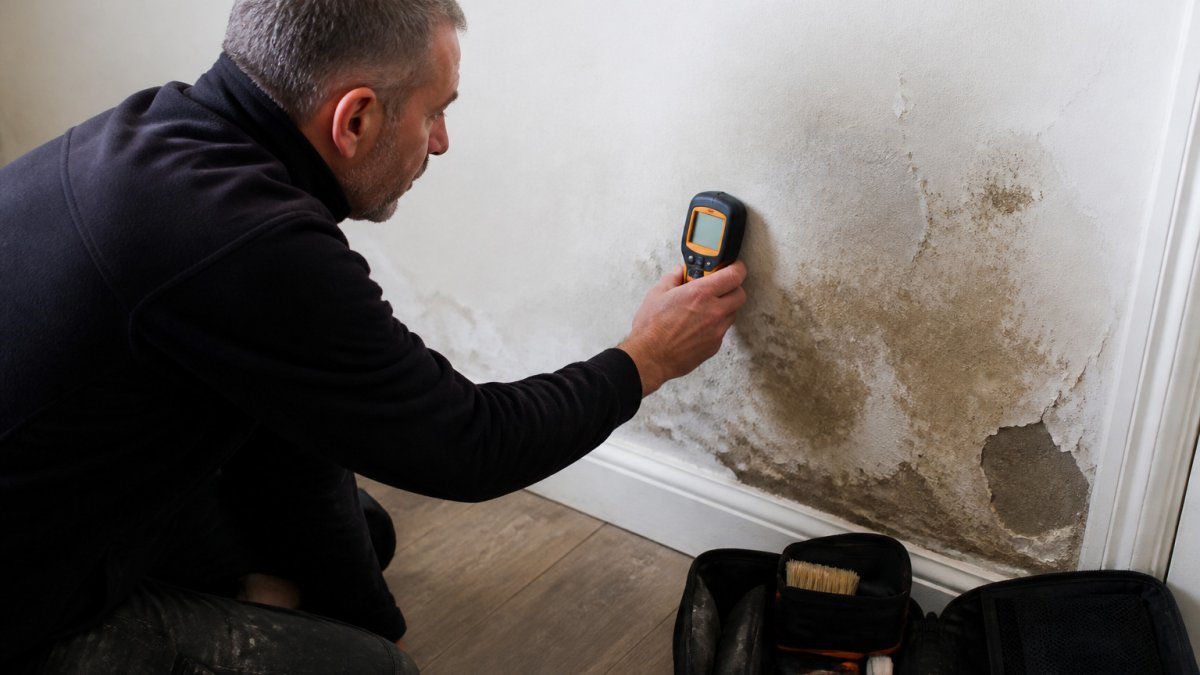
Use the readings as a starting point rather than a final answer. Persistently high humidity in one room suggests a local cause, such as a drying room, poor extraction or a cold corner. In that case, a condensation diagnosis from a professional can identify the source.
Trickle vents, extractor fans and steady background ventilation are the usual fixes. Our full guide on how to improve home ventilation explains how to set them up. For the windows themselves, our guide on the best way to stop window condensation covers the common causes and remedies.
Sensor Accuracy, Placement and Room-by-Room Monitoring
Consumer sensors are useful, but they have limits. Readings can drift over time, and cheaper units may report values that differ from calibrated lab equipment.

Placement changes the results. Keep monitors away from radiators, direct sunlight, kitchen steam, and open windows, and position them at around head height where people actually breathe. Room-by-room monitoring is more useful than a single sensor in a hallway, because it shows which rooms need attention.
Recalibrate or replace sensors as the manufacturer advises, and do not rely on one reading taken at a single moment of the day.
Booking a Free Call to Plan Your Ventilation and Moisture Fixes
Once you have readings, the next question is what to fix first. Dri-House takes a root-cause approach to damp, condensation and poor ventilation, and the team can review your results and recommend a practical plan. Ventilation, window and door upgrades can all be part of that plan, depending on what the house needs.
Advice can be tailored to your budget and your property. Book a free call with Dri-House and we will talk through what your readings suggest and what to do next.
Frequently Asked Questions
What is the best smart air quality monitor for a home?
The best choice depends on what you need to track. If your concern is damp and condensation, pick a monitor that reads humidity and temperature alongside particulate matter and VOCs. If stuffy rooms are the issue, look for a CO2 sensor, since CO2 levels rise quickly in closed bedrooms and living rooms. Check that the device connects to an app with historical data and alerts, so you can spot patterns over days and weeks rather than reacting to single readings. Dri-House can talk through which features suit your property; contact the team for a free call and a quote, as pricing depends on the work involved.
What should an indoor air quality monitor measure?
A useful indoor air quality monitor tracks particulate matter (PM2.5 and PM10), volatile organic compounds (VOCs), carbon dioxide (CO2), temperature and relative humidity. Some models add barometric pressure or noise level. Humidity and CO2 are the most relevant for condensation and ventilation problems, while PM2.5 and VOCs help show whether cooking, cleaning products or outdoor pollution are affecting the home. Radon needs a dedicated detector, so check whether a device claims to measure it before relying on it for that purpose.
Are smart air quality monitors accurate?
Consumer monitors are useful for spotting trends and comparing rooms, but their readings are not laboratory grade. Sensor accuracy varies by model, and low-cost optical particle sensors can drift over time or be affected by humidity. Look for devices that publish their measurement range and calibration approach, and treat sudden spikes with caution. Use the readings to decide where to ventilate or where damp may be developing, rather than as a precise scientific measurement.
Can an air quality monitor detect mould?
A standard air quality monitor cannot directly detect mould spores. What it can do is flag the conditions that allow mould to grow, mainly sustained high humidity and poor ventilation. Readings consistently above roughly 60 per cent relative humidity, or condensation forming on cold surfaces, suggest that mould is likely to develop. If you can see or smell mould, the monitor will not confirm its extent, so a professional inspection is the right next step.

Comments