
Stop Condensation on Bedroom Walls: A Step-by-Step Guide
Table of Contents
Why Condensation Forms on Bedroom Walls
Measure Your Humidity and Temperature First
Improve Bedroom Ventilation to Reduce Condensation
Heat Your Bedroom Consistently
How to Remove Condensation From Walls and Prevent Moisture Build-Up
Anti-Condensation Paint and Protective Barriers for Bedroom Walls
Long-Term Fixes: Insulation and Thermal Bridging
Handle Mould Growth Safely and Know When to Call a Professional
Frequently Asked Questions
Last Updated: October 7, 2026
Why Condensation Forms on Bedroom Walls
Condensation appears when warm air meets cold surfaces. Your bedroom walls collect moisture because they're colder than the air around them, most often in winter. The cause is too much moisture in the air, surfaces that are too cold, or both. Bedrooms are vulnerable because they're often the smallest, least-ventilated rooms, and a sleeping person releases water vapour all night.
How to tell condensation apart from damp or leaks
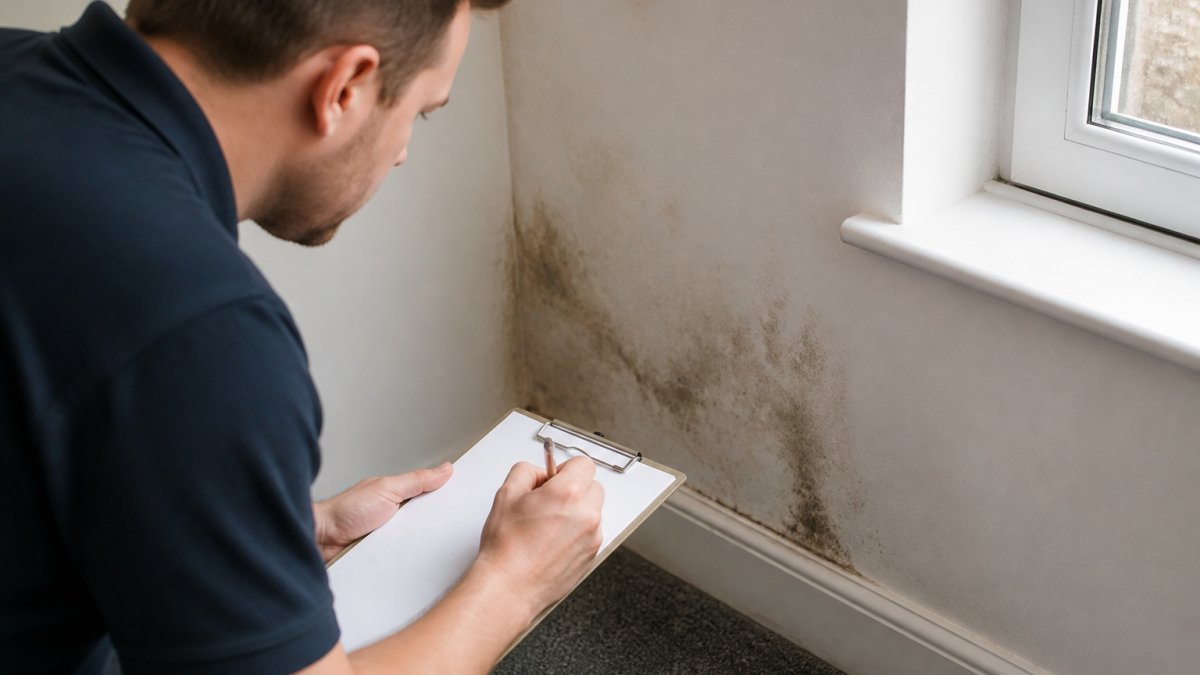
Condensation feels wet but wipes away cleanly, appearing on cold surfaces like windows, external walls and corners. Damp stains are darker, permanent and musty. Leaks show water running down walls or pooling at the base. To check: wipe the wet area with a cloth. Condensation dries; damp stains return within hours; leaks leave trails or damaged plaster. The fix differs for each, so diagnosis matters.
Measure Your Humidity and Temperature First
You cannot fix what you don't measure. Buy a cheap humidity meter (hygrometer) and leave it in your bedroom for 24 hours. Ideal indoor humidity sits between 40% and 60%; above 60% condensation becomes likely, and above 70% mould growth accelerates. Bedrooms should stay between 16°C and 18°C at night; colder rooms make condensation worse. If your bedroom is below 15°C, heating it will help stop condensation on bedroom walls, but you'll need ventilation to remove the extra moisture. Note your readings for a professional.
Improve Bedroom Ventilation to Reduce Condensation
Ventilation removes moist air before it can settle on walls, the single most important step. Without it, every other fix is temporary.

Open windows and use night-latch settings
Opening a window for 5 to 10 minutes each morning works, even in winter, cold air mixes with warm, moist air and carries moisture outside.
Install or unblock airbricks and passive vents
Airbricks are small vents built into external walls; passive vents sit in windows or walls and let air flow naturally. Many older homes have them, check your bedroom walls for small grilles and clear any blocked by furniture, paint or debris.
Heat Your Bedroom Consistently
Cold walls attract condensation. A bedroom heated to 18°C stays drier than one at 12°C, even at the same humidity level, so consistent heating matters more than occasional bursts of warmth. Set your heating to hold a steady temperature day and night, turning it off at night cools the walls and moisture condenses. Corner rooms and rooms with an external wall lose heat faster: close curtains at night and move furniture away from external walls so warm air can circulate behind it.
Energy Saving Trust
How to Remove Condensation From Walls and Prevent Moisture Build-Up
Daily wiping and moisture reduction
Wipe condensation off walls and windows every morning with a dry cloth or squeegee, two minutes removes the water before it soaks into plaster or triggers mould. Then leave windows or vents open for 10 minutes.
Reduce moisture at the source. These activities add water vapour:
Drying clothes indoors (hang them outside or in a separate room with a window open)
Hot showers without ventilation (open a bathroom window or run the extractor fan)
Using a humidifier (turn it off if humidity is already above 50%)
Cooking in a small bedroom (use the kitchen fan and close the bedroom door)
Boiling kettles in bedrooms (avoid this entirely)
Each doubles or triples the moisture your bedroom has to handle. Cut even one and you'll notice a difference.
Reduce moisture from everyday activities
Your body releases water vapour while you sleep, a couple in an unventilated room adds 1 to 2 litres each night. You cannot stop this, but you can remove it: leave your bedroom door open during the day so moist air can move through the home, and open a landing or hallway window if you have one. Wash bedding weekly in hot water, and dry towels outside the bedroom or in a well-ventilated bathroom, damp bedding and wet towels release moisture slowly.
Anti-Condensation Paint and Protective Barriers for Bedroom Walls
Anti-condensation paint is a surface treatment, not a cure. Knowing what it can and cannot do stops you wasting money on a product that only masks the problem.
How anti-condensation paint works
Where it helps and where it fails
It works best on:
Internal corners and window reveals where airflow is poor
Walls that are only marginally cold (a few degrees below the dew point)
Bedrooms where you have already fixed ventilation and heating but want a belt-and-braces layer
It fails on:
Uninsulated solid external walls that stay cold all winter
Walls with thermal bridging, where the cold spot is inside the structure, not on the surface
Rooms where moisture generation is still high (indoor drying, unvented showers, humidifiers)
Rule of thumb: if your hygrometer reads above 65% most mornings, fix the moisture first, paint will not save you.
Cost and effort
A 2.5-litre tin typically costs £25-£45 and covers around 12-15 square metres in two coats, a half-day job for one wall: clean, dry fully, apply two coats, ventilate while curing.
Paint is the cheapest intervention but the narrowest in scope, a symptom treatment, while ventilation and heating treat the cause.
Protective barriers and vapour-permeable membranes
Vapour-permeable (breathable) membranes and insulating linings sit behind new plaster or insulation, letting moisture vapour pass while blocking liquid water and adding a little thermal resistance.
Watch Out Do not apply anti-condensation paint over existing mould or damp plaster. The coating will trap moisture and the mould will return through the paint. Clean, dry and treat the wall first, or fix the underlying cause before decorating.
How the options compare
Remedy | Typical cost | Treats cause or symptom? | Best for |
Anti-condensation paint | £25-£45 per room | Symptom | Marginal cold walls, finishing touch |
Electric dehumidifier | £120-£200 plus running cost | Symptom (manages moisture) | Rooms with no easy ventilation route |
Passive vent or airbrick | £15-£40 plus fitting | Cause (removes moisture) | Older homes with blocked or missing vents |
Mechanical extract fan | £80-£250 plus fitting | Cause (removes moisture) | Small bedrooms, en-suites, drying areas |
Internal or external wall insulation | Several hundred to several thousand pounds | Cause (warms the wall) | Recurring condensation on solid external walls |
Use this as a sequence, not a menu. Start with the cheapest cause-focused fixes (ventilation, heating, moisture reduction).
Long-Term Fixes: Insulation and Thermal Bridging
If you have measured humidity, improved ventilation, heated consistently and still wake up to wet walls, the problem is almost certainly the wall itself.
Diagnosing a cold wall problem
Before spending money on insulation, confirm the wall is the issue rather than the air. Two checks help:
Surface temperature check. An infrared thermometer (available for £15-£30) pointed at the wall on a cold morning will show surface temperatures. If the wall reads below roughly 12-13°C while the room air is at 18°C, the wall is cold enough to condense moisture from normal bedroom air.
Pattern check. Condensation that forms in a stripe, a patch around a lintel, or a vertical band at a wall junction suggests thermal bridging, a cold path through the structure. Condensation spread evenly across a whole external wall suggests the wall as a whole is under-insulated.
A thermal camera gives a clearer picture but costs more; some energy advice services and surveyors offer thermal imaging within a home assessment.
What thermal bridging actually is
Bridging cannot be fixed with paint or a dehumidifier.
Internal wall insulation
Typical cost: £40-£100 per square metre installed, depending on the product and the amount of making good required.
Pros: Cheaper than external insulation, no change to the outside appearance, can be done room by room.
Cons: Reduces room size by roughly 50-100mm per wall, disrupts skirting boards, sockets and radiators, and creates a risk of interstitial condensation if the detailing is wrong. It must be installed by someone who understands vapour control.
External wall insulation
External insulation wraps the outside of the building in an insulating layer with a render or cladding finish.
Typical cost: £90-£180 per square metre installed, though solid wall properties and complex elevations push this higher.
Pros: Keeps the room size, eliminates most thermal bridging at wall junctions, improves the whole building's energy performance, and can be supported by government energy efficiency schemes in some cases.
Cons: Expensive, requires scaffolding, changes the external appearance, and may need planning permission in some situations (for example on listed buildings or in conservation areas).
Which to choose
Internal insulation suits a single problem bedroom where you can lose a little space and want a contained job.
When to call a professional
Bring in a qualified surveyor or damp specialist if:
Condensation returns every winter despite good ventilation and consistent heating
You can see mould in a distinct pattern (line, patch or band) suggesting bridging
The wall feels cold to the touch across a large area
You are considering insulation and need to know whether internal or external is appropriate
There is any chance the problem is actually penetrating damp or a leak rather than condensation
A proper assessment should include moisture readings, surface temperature checks and a look at the wall construction.
Key Takeaway Insulation is the only fix that stops condensation at the source on a cold wall. It is also the most expensive. Work through ventilation, heating and moisture reduction first, then use surface temperature readings and condensation patterns to decide whether internal or external insulation is the right next step.
A note on ventilation upgrades
Sometimes the wall is fine but the room cannot breathe.
Handle Mould Growth Safely and Know When to Call a Professional
Mould appears as black or green patches on walls, ceilings and window frames, growing where condensation sits for days. Its spores trigger allergies and breathing problems, especially in children.
Clean small patches (under 1 square metre) yourself.
Do not use bleach on porous surfaces like plaster or drywall. Bleach kills the surface mould but doesn't reach spores inside the material. Vinegar penetrates better.
Call a professional if:
Mould covers more than 1 square metre
Mould returns after you clean it
Mould appears on multiple walls or ceilings
Anyone in your home has asthma, allergies, or a weak immune system
The mould smells strongly musty (sign of deep contamination)
We identify whether your issue is condensation, rising damp, or penetrating damp. Then we fix the root cause, not just the symptom. This stops mould coming back.
Stop condensation on bedroom walls by measuring humidity first, then improving ventilation and heating. Open windows daily, unblock vents, and keep your bedroom at a steady 16-18°C.
Frequently Asked Questions
Does condensation mean my house is too cold?
Cold surfaces are part of the problem, but condensation forms when warm, moisture-laden air hits a cold surface. A bedroom that's poorly heated relative to the moisture inside will develop condensation, especially on external walls and window reveals. Heating alone won't solve it if ventilation and moisture sources remain unaddressed. The real issue is the combination of high humidity, cold surfaces, and poor air circulation.
How can I reduce condensation in a bedroom overnight?
Open a window or use a night-latch setting to allow fresh air circulation while you sleep. This removes moisture-laden air before it condenses on cold walls. Wipe down any condensation that does form on windows or walls before bed. If the room is cold, use gentle heating to raise the surface temperature of external walls. A dehumidifier can also help overnight, though ventilation is the most effective long-term approach.
When is condensation a sign of a damp problem rather than poor ventilation?
Condensation appears on cold surfaces and is seasonal or activity-related; it worsens in winter or after showers. Damp patches stay damp year-round, feel cold and clammy, may smell musty, and often appear at the base of walls or near corners. If you see condensation only in winter and it improves when you ventilate, that's condensation. If damp patches persist even with windows open and heating on, or if water is visibly entering from outside, consult a professional to rule out penetrating damp or rising moisture.
Should I wipe condensation off bedroom walls?
Yes, wipe it down regularly to prevent mould growth and to remove excess moisture from the room. Use a dry cloth or squeegee on windows and walls. However, wiping is only a short-term fix; it doesn't address the root cause. The condensation will return unless you tackle humidity, ventilation, and heating. Pairing daily wiping with improved ventilation and reduced moisture sources is the most practical immediate approach.
Book Free Call

Comments