
Signs of Rising Damp in Houses: What to Look For
Table of Contents
What Rising Damp Looks Like: Key Signs to Check
Tide Marks and Damp Patches
Efflorescence and Hygroscopic Salts
What Causes Rising Damp in Older and Modern Homes?
How to Tell the Difference Between Rising Damp and Condensation
DIY Checks vs Professional Damp Survey for Home Buyers
The Pre-Inspection Checklist: Do This Before You Book Anyone
What a Professional Survey Actually Adds
The Cost-Avoidance Angle Most Guides Miss
Rising Damp Treatment Cost: What Affects the Price
How Rising Damp Affects Property Value and Insurance
What Happens During a Sale
What Insurance Actually Covers
How to Protect Your Property Value
When to Call a Professional: Next Steps for Homeowners
Frequently Asked Questions
Last Updated: September 21, 2026
What Rising Damp Looks Like: Key Signs to Check
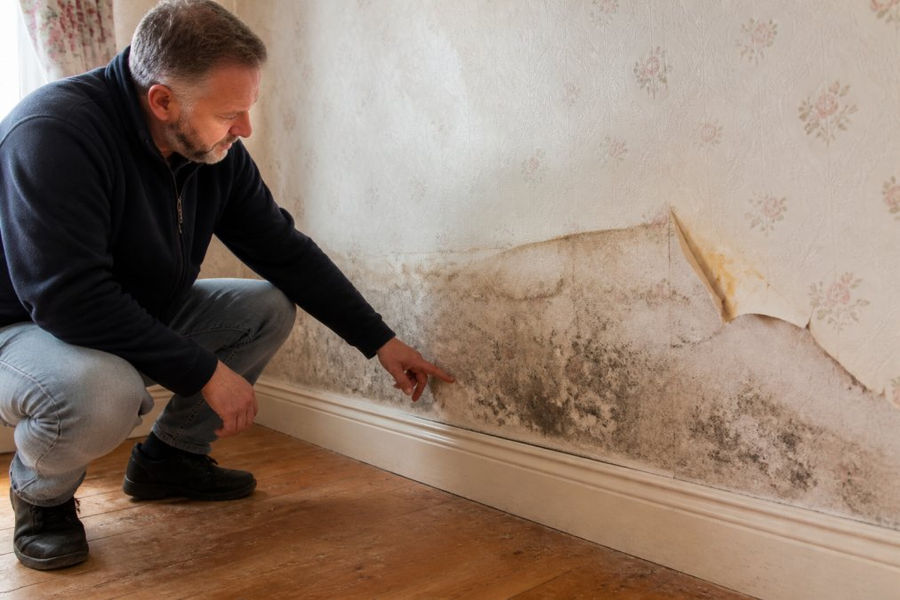
Groundwater creeping up through porous masonry leaves a trail you can read on your walls. The signs of rising damp in houses follow a predictable pattern. The tell-tale marker is a discoloured band running along the base of a wall, usually no higher than a metre, often accompanied by a musty smell that lingers no matter how much you ventilate.
Tide Marks and Damp Patches
A tide mark is a horizontal stain line left where evaporating moisture deposits salts and minerals, and it is the single most reliable visual clue of rising damp. You'll find it low on the wall, typically between the skirting board and roughly one metre up. The band often looks darker than the plaster around it, sometimes with a grey or brownish edge.
Look for these alongside it:
Damp patches that feel cold and slightly clammy to touch
Blistering paint or wallpaper lifting away from the wall
Skirting board decay, where timber softens, darkens, or crumbles
A musty smell strongest near ground level
Black mould growth concentrated along the lower wall rather than in corners
Efflorescence and Hygroscopic Salts
Efflorescence is the white, powdery bloom that appears when salt migration carries minerals to the wall surface as moisture evaporates. It brushes off easily, which is exactly why it gets dismissed as harmless dust.
What Causes Rising Damp in Older and Modern Homes?
Rising damp happens when groundwater moves upward through porous masonry by capillary action, bypassing or overwhelming a failed damp proof course. Older homes built without an effective DPC are the classic candidates, but newer properties are not immune. A breached or bridged DPC, soil piled above the ground level line, or blocked sub-floor ventilation can all recreate the conditions.
Watch Out Piling soil, gravel, or a new patio above the existing damp proof course is one of the most common causes we see. It bridges the barrier and lets moisture straight into the wall. Keep external ground level at least two brick courses below the DPC.
How to Tell the Difference Between Rising Damp and Condensation
Knowing how to tell the difference between rising damp and condensation saves you from paying for the wrong fix. Condensation is by far the more common problem in modern, well-sealed homes. It comes from indoor humidity, not groundwater.
Peter Cox Damp Proofing
Here's the quick comparison:
Feature | Rising Damp | Condensation |
Location | Lower walls, ground floor | Cold surfaces, corners, windows |
Pattern | Horizontal tide mark | Widespread, patchy |
Timing | Constant, year-round | Worse in cold weather |
Smell | Musty, earthy | Damp, stale |
Salts | White efflorescence common | Rare |
Mould | Low on wall | Ceilings, corners, behind furniture |
DIY Checks vs Professional Damp Survey for Home Buyers
A damp survey for home buyers is worth commissioning before you exchange contracts, because a surveyor's report tells you whether you're looking at a cosmetic issue or a structural one. DIY checks can flag the warning signs, but they can't confirm the cause with certainty. The gap most guides leave is when to spend money on a survey, and how to avoid paying for one you don't need.
The Pre-Inspection Checklist: Do This Before You Book Anyone
Work through this in order. If you can rule rising damp out at any stage, stop and address the actual cause instead.
Map the moisture pattern. Run your hand along the base of every external wall on the ground floor. Rising damp is continuous along a wall; condensation is patchy and clusters on cold surfaces.
Find the tide mark. Look for a horizontal stain line between the skirting board and roughly one metre up. Photograph it with a ruler or tape measure in frame for scale.
Check the external ground level against the DPC. The damp proof course is usually visible as a dark, slightly protruding band in the brickwork, roughly 150mm above external ground level. If soil, gravel, or a new patio sits above it, you've found a likely cause without needing a survey.
Inspect air bricks and sub-floor vents. Blocked or painted-over vents trap moisture under the floor and can mimic rising damp. Clear them and re-check after a few weeks.
Test with a cheap moisture meter. Take readings at skirting level, mid-wall, and one metre up. A reading that climbs steadily from the floor upward points to rising damp; scattered readings point to condensation.
Rule out plumbing. A slow leak behind a wall or under a floor can produce a very similar tide mark. Check for recent water bills, boiler pressure drops, or visible pipework before assuming groundwater.
What a Professional Survey Actually Adds
A chartered surveyor or damp specialist brings tools and judgement a homeowner can't replicate:
A calibrated moisture meter, plus carbide or gravimetric testing where readings are ambiguous
Salt analysis to distinguish hygroscopic contamination from active groundwater ingress
Confirmation of whether the DPC has failed, been bridged, or was never installed
A written diagnosis you can use in price negotiations or an insurance dispute
A treatment specification matched to the actual cause, not a generic injection quote
The Cost-Avoidance Angle Most Guides Miss
A damp survey can be an expense. That sounds like an expense until you compare it to the alternative: paying for a damp proofing injection course you didn't need, then replastering, then discovering the real problem was a bridged DPC or a leaking pipe. A survey that correctly rules out rising damp is not wasted money, it's the cheapest part of the job.
Pro Tip Photograph every damp patch with a tape measure in frame, and note the date. A surveyor can work far faster, and more accurately, from dated, scaled photos than from memory, and the same photos become evidence if the issue recurs after treatment.
Watch Out Be wary of any contractor who diagnoses rising damp on a first visit without taking moisture readings at multiple heights or checking the DPC line. A visual inspection alone cannot reliably distinguish rising damp from condensation, penetrating damp, or a plumbing leak.
Rising Damp Treatment Cost: What Affects the Price
Rising damp treatment cost varies widely because no two properties present the same problem. Pricing depends on the size of the affected wall area, whether the DPC needs injecting or full replacement, the extent of plaster contamination, and whether timber repairs are needed. Access matters too: a ground-floor wall is straightforward, while a basement or a wall behind fitted units adds labour.
How Rising Damp Affects Property Value and Insurance
Unresolved rising damp can affect both your sale price and your insurance cover, but the detail matters more than the headline. Most guides skip this entirely, which leaves homeowners surprised at the worst possible moment, during a sale or a claim.
What Happens During a Sale
When a buyer's surveyor flags rising damp, the report usually triggers one of three responses:
A renegotiation. The buyer asks for a price reduction roughly equal to the estimated treatment cost, often with a margin for uncertainty.
A condition on the mortgage. Some lenders will hold back part of the valuation until remedial work is completed and signed off, particularly where the damp is extensive or affects structural timber.
A withdrawal. Less common, but it happens when the damp is combined with other issues and the buyer loses confidence in the property's overall condition.
What Insurance Actually Covers
This is where expectations most often diverge from reality. Most buildings insurance policies treat damp and its consequences as a maintenance issue rather than an insured peril. In practice that means:
The cost of damp proofing itself is almost never recoverable through a standard buildings policy.
Damage caused by a sudden, identifiable event, a burst pipe, a storm lifting a roof tile, is typically covered, but the resulting damp from that event may be treated separately.
Mould and condensation problems are usually excluded outright, because they stem from living conditions and ventilation rather than a single insured event.
Some policies include limited cover for escape of water that can extend to related damp damage, but the wording varies widely between insurers.
How to Protect Your Property Value
If you've had rising damp treated, treat the paperwork as part of the asset:
Keep the original survey report, including moisture readings and salt analysis.
Keep the contractor's specification of works and any guarantees, most damp proofing guarantees run for 20 to 30 years and are transferable to a new owner.
Photograph the property before, during, and after treatment, with dates.
Store everything digitally as well as on paper, so it can be sent to a buyer's solicitor quickly.
Key Takeaway Rising damp rarely destroys a sale on its own, but undocumented rising damp frequently costs money at the negotiating table. A survey report, a specification, and a transferable guarantee are the three documents that protect your position.
Watch Out Do not assume your buildings policy will cover damp treatment. Check the exclusions for "gradual deterioration", "lack of maintenance", and "condensation" before you rely on insurance to fund a fix.
When to Call a Professional: Next Steps for Homeowners
Call a professional when you see a tide mark combined with hygroscopic salts, when a moisture meter reads consistently high along a lower wall, or when damp returns after you've addressed ventilation and condensation. These point to a failed damp proof course, and no amount of cleaning will fix it.
Frequently Asked Questions
What can be mistaken for rising damp?
Condensation and penetrating damp are often confused with rising damp. Condensation leaves water droplets on windows and cold surfaces, while penetrating damp comes from leaks or defective guttering and appears as damp patches on walls or ceilings. Rising damp typically shows a tide mark up to one metre high, with white salt deposits and a musty smell. A professional damp survey can confirm the exact cause.
Is it illegal to sell a house with rising damp?
No, it is not illegal to sell a house with rising damp, but you must declare it on the TA6 property information form. If you fail to disclose known damp problems, the buyer could take legal action or renegotiate the price. A damp survey for home buyers is recommended to assess the extent of the issue and avoid surprises during conveyancing.
Does rising damp always leave a tide mark?
Not always. Tide marks are common, but some properties show only damp patches, blistering paint, or a musty smell. In severe cases, skirting board decay and plaster contamination may be visible without a clear tide line. If you notice any of these signs, a moisture meter reading and professional assessment are the best ways to confirm rising damp.
How serious is rising damp in a home?
Rising damp can damage plaster, skirting boards, and structural timber if left untreated. It also creates a damp environment that encourages mould growth, which can affect indoor air quality. The longer it is ignored, the higher the rising damp treatment cost is likely to be. Early detection and a proper damp proof course are key to protecting your property.
Persistent damp rarely resolves on its own, and the longer it's left, the more it costs to put right. Dri-House handles damp and mould treatment, ventilation, and window and door upgrades under one roof, addressing the cause rather than the symptom. Book a free call with Dri-House and get a clear, honest plan for a drier, healthier home.
Book Free Call


Comments